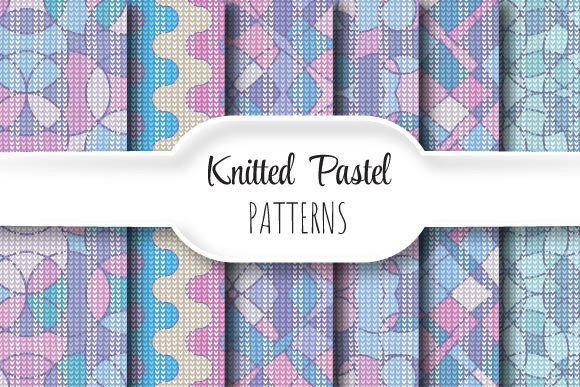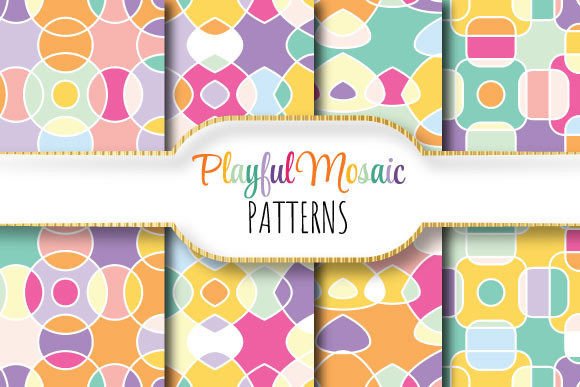
Knitted Mosaic Patterns for Seamless Design
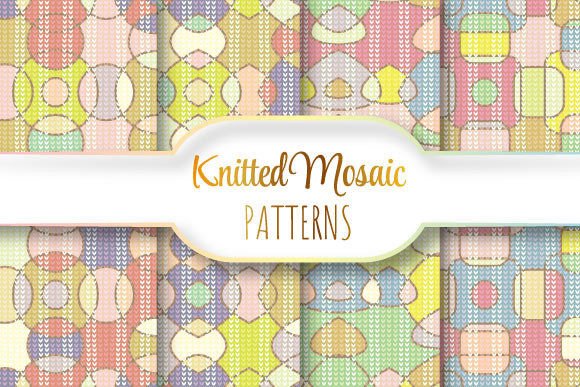
Knitted Mosaic Patterns are a clever blend of textile tradition and modern digital design—offering rich, interlocking color blocks that mimic hand-knitted texture while functioning as fully scalable, repeatable vector graphics. Unlike complex fractal or organic patterns, these designs use clean geometry and deliberate contrast to create rhythm and visual warmth. They’re built to tile perfectly edge-to-edge, making them ideal for backgrounds, surfaces, packaging, and print layouts where consistency matters.
Why These Patterns Stand Out
Each Knitted Mosaic Pattern arrives as a professionally prepared 12 × 12 inch (3600 × 3600 pixel) file at 300 dpi—ready for high-resolution printing without blur or pixelation. The vector EPS 10 format ensures crisp scaling from business card size to billboard, while the included JPEGs (in multiple color variations or orientations) offer quick preview and web-friendly flexibility. You get one versatile EPS file plus four optimized JPEGs—all packed into a single, lightweight ZIP.
What makes them especially useful is their intentional simplicity: no gradients, no transparency tricks, no overlapping layers. Just bold, flat-color shapes aligned with mathematical precision. That means they work equally well on fabric swatches, stationery, social media banners, lesson plans, or Shopify product mockups—without needing design expertise to adapt them.
Real Uses Across Roles and Projects
A freelance graphic designer might drop a Knitted Mosaic Pattern into a client’s packaging layout to add tactile appeal without overwhelming branding. A small-batch candle maker could apply it as a subtle background on labels or website headers—evoking handmade care without literal knitting imagery. An educator teaching textile history might project the pattern during a lesson on mosaic techniques, then print it as a coloring sheet to reinforce symmetry and repetition concepts.
Bloggers writing about cozy aesthetics often struggle to find visuals that feel warm but remain professional—these patterns bridge that gap. Marketers building seasonal email campaigns can layer text over a muted Knitted Mosaic Pattern for instant visual cohesion. Even hobbyists embroidering custom tote bags may trace the vector outlines onto fabric as a stitching guide.
Beginner-Friendly Flexibility
If you’ve never opened an EPS file before, don’t worry—it opens cleanly in Adobe Illustrator, Affinity Designer, CorelDRAW, and even recent versions of Inkscape (with minor adjustments). No need to edit paths unless you want to: the colors are pre-separated, the repeat is mathematically locked, and the spacing is balanced for both close-up viewing and distance readability.
The JPEG files serve as ready-to-use alternatives if you're working in Canva, PowerPoint, or Photoshop Elements. Use the light version for overlays, the dark version for contrast-rich posters, or the two mid-tone variants for social posts where brand colors need breathing room.
What to Keep in Mind Before Using
Because these patterns rely on strong value contrast and clear shape boundaries, they shine best against neutral or solid-color backdrops—not busy photos or layered textures. If you’re planning to print on textured paper or fabric, request a physical proof first: subtle shifts in ink absorption can affect how sharply the mosaic “blocks” read.
Also consider scale context. At full 12 × 12 inch size, the pattern reads as a cohesive surface. But zoomed in to 200%, you’ll notice each “stitch” is actually a carefully placed rectangle or diamond—designed to echo knitting structure without mimicking it literally. That intentionality supports versatility, but it also means they won’t substitute for photorealistic knit scans if hyper-realism is your goal.
Matching Pattern to Purpose
Not all Knitted Mosaic Patterns suit every project. A tightly spaced, high-contrast version works beautifully on apparel tags or minimalist notebook covers. A looser, airier arrangement with softer edges may better suit nursery decor or wellness brand assets. When browsing collections, look beyond color—you’re really choosing rhythm, density, and visual weight.
For commercial use, verify licensing terms (most include standard commercial rights), and remember that while the EPS allows unlimited resizing, altering the core repeat grid may break seamless tiling. If you need custom color matching or orientation flips, most designers provide simple edits upon request—no need to wrestle with anchor points yourself.
Designing With Intention, Not Just Decoration
What sets Knitted Mosaic Patterns apart isn’t just technical quality—it’s how thoughtfully they balance craft and function. They invite interaction: you might rotate one 45 degrees to shift its energy, layer two at low opacity for depth, or isolate a single motif as a standalone icon. Because they’re rooted in real textile logic—not algorithmic randomness—they carry quiet authenticity.
That resonance matters whether you’re launching a slow-living blog, updating classroom materials, or designing merch for a local yarn shop. You’re not just adding decoration; you’re signaling attention to detail, respect for process, and comfort with simplicity.
A Practical Starting Point
Try this: open the light JPEG in your presentation software, set it as a slide background at 15% opacity, and place your headline in a clean sans-serif font. Instant warmth, zero clutter. Or import the EPS into Illustrator, select all, and recolor using your brand palette in one click—then export new JPEGs for your team to use across platforms.
No special plugins. No steep learning curve. Just reliable, beautiful repetition—ready when you are.