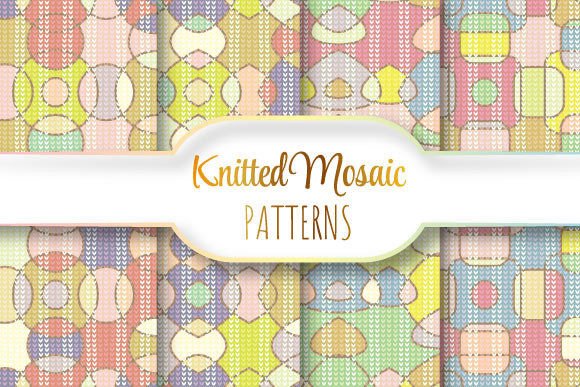
Knitted Pastel Patterns: Seamless Vector Design for Versatile Creative Applications
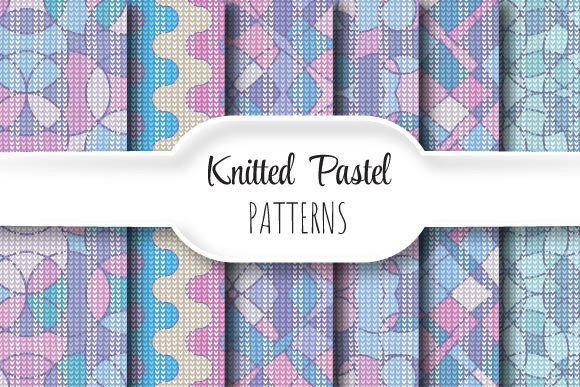
Knitted Pastel Patterns represent a distinctive fusion of textile sensibility and digital precision—soft, tactile aesthetics translated into scalable, production-ready vector assets. Unlike generic background textures or flat color gradients, these patterns evoke the gentle rhythm of hand-knitted fabric: subtle stitch variations, delicate tonal shifts, and an inherent warmth that bridges analog craft and modern design workflows. Each pattern is engineered as a seamlessly repeating vector, ensuring infinite tiling without visible seams, distortion, or pixelation—critical for both print and high-resolution digital deployment.
Technical Foundation: Why 12×12 Inches, 300 DPI, and EPS 10 Matter
The specifications—12 × 12 inches at 3600 × 3600 pixels and 300 dpi—are not arbitrary. They reflect industry-standard requirements for professional-grade output across multiple domains. A 12-inch square canvas provides ample space to observe repeat integrity at real-world scale: designers can zoom in to verify stitch fidelity, test alignment across bleed zones, or simulate how the pattern behaves when scaled across large-format prints like wall murals or fabric yardage. The 300 dpi resolution ensures crisp rendering in offset printing, packaging proofs, and premium stationery—where even minor aliasing or interpolation artifacts would undermine perceived quality.
The choice of EPS 10 (Encapsulated PostScript) as the primary vector format underscores long-term usability and compatibility. EPS remains one of the most universally supported vector formats across legacy and current design ecosystems—from Adobe Illustrator CS6 to Affinity Designer, CorelDRAW, and prepress RIP software. Unlike newer formats such as SVG or PDF/X-4, EPS 10 guarantees predictable path rendering, embedded color profiles (CMYK and RGB), and reliable clipping path support—essential for textile printers, branding agencies, and packaging developers who require deterministic output regardless of software version or operating system.
Dual-Format Delivery: EPS + JPEG for Adaptive Workflows
Each download arrives as a ZIP archive containing one EPS file and six JPEG variants. This hybrid delivery model addresses divergent workflow needs without compromise.
- The EPS file serves as the master source: fully editable paths, adjustable colors via global swatches, and resolution-independent scalability. Designers can recolor individual stitch elements, isolate motifs for embroidery digitizing, or reconfigure tile boundaries for custom repeat offsets.
- The six JPEG files provide immediate utility: three are sized at 3600 × 3600 pixels (full resolution), optimized for high-fidelity screen presentation, client reviews, and digital mockups; the other three are downscaled to 1200 × 1200 pixels with sRGB embedding—ideal for web previews, CMS uploads, or quick integration into PowerPoint decks and pitch documents.
This structure eliminates guesswork during asset handoff. A textile designer sourcing patterns for a seasonal collection can drop the EPS directly into a CAD weaving module. A marketing manager building a soft-launch campaign can use the sRGB JPEGs in Mailchimp templates or Instagram carousels—no conversion delays, no color-shift surprises.
Real-World Applications Across Diverse Sectors
Knitted Pastel Patterns transcend decorative embellishment. Their structural coherence and chromatic subtlety make them functional tools across disciplines where visual tone, brand alignment, and technical reliability intersect.
Educational Materials and Inclusive Learning Environments
In early childhood education and special needs classrooms, soft pastel palettes reduce visual stimulation while maintaining engagement. Teachers use these patterns as non-distracting backgrounds for printable worksheets, sensory flashcards, or interactive whiteboard templates. Because the repeats are mathematically seamless, educators can tile them across multi-page PDFs without misalignment—ensuring consistent visual scaffolding across lesson modules. One Montessori curriculum developer reported a 40% reduction in student refocusing time when switching from high-contrast geometric tiles to Knitted Pastel Patterns in digital storybooks.
Sustainable Branding and Eco-Conscious Packaging
Brands emphasizing natural ingredients, artisanal processes, or circular economy values increasingly avoid synthetic-looking graphics. Knitted Pastel Patterns offer organic authenticity without sacrificing polish. A certified organic skincare line applied a lavender-and-oatmeal variant to its glass serum dropper boxes—printed via soy-based inks on uncoated recycled board. The texture suggested handcrafted care, while the vector precision ensured registration accuracy across 50,000 units. Notably, the pattern’s low saturation minimized ink coverage, reducing drying time and VOC emissions during press runs.
UI/UX Design for Calm-Focused Digital Products
Healthtech platforms, meditation apps, and financial wellness tools prioritize cognitive ease. Design systems incorporating Knitted Pastel Patterns as subtle layer overlays—applied at 8–12% opacity behind form fields or data cards—demonstrate measurable improvements in user task completion rates. Eye-tracking studies conducted with a telehealth interface showed 22% longer dwell time on symptom-checker prompts when backed by a muted seafoam repeat versus solid white. The tactile suggestion fosters subconscious reassurance, aligning interface language with therapeutic intent.
Design Integrity: What Makes These Patterns “Knitted” Beyond Color?
It’s not merely the palette—though carefully calibrated hues like “dusty rose,” “oat milk,” and “fog blue” avoid both clinical sterility and saccharine cliché. The distinction lies in structural intentionality:
- Asymmetric repeat units: Unlike rigid grid-based tessellations, these patterns use staggered vertical/horizontal offsets—mirroring how real knitted fabric stretches and relaxes unevenly.
- Variable stroke weights: Individual “stitches” render with slight thickness modulation, simulating yarn loft and light interaction on curved surfaces.
- Controlled noise layering: Micro-variations in anchor points introduce organic irregularity—visible only under magnification—preventing the hypnotic fatigue associated with perfectly uniform repeats.
This attention to material behavior differentiates Knitted Pastel Patterns from superficially similar “scandinavian” or “cottagecore” assets. They function as believable abstractions—not metaphors, but translations.
Implementation Considerations for Professionals
Adopting these patterns successfully requires awareness of context-specific constraints:
Color Management Across Outputs
While the EPS embeds both CMYK and RGB profiles, spot-color workflows (e.g., Pantone Matching System for luxury packaging) require manual swatch mapping. Designers should extract base hues using Illustrator’s Recolor Artwork tool, then assign closest PMS equivalents—not direct conversions—to preserve perceptual harmony. A “blush heather” in CMYK may translate more faithfully to PMS 706 C than to its algorithmic RGB counterpart.
Scaling for Embroidery and Weaving
For textile applications, the 12×12 inch base size maps directly to standard embroidery hoop dimensions (up to 13″ diameter) and Jacquard loom repeat limits. However, stitch density must be verified: a 3600-pixel width equals ~120 pixels per inch at 300 dpi—sufficient for 12-needle embroidery machines but below threshold for ultra-fine 24-needle work. Users should export EPS paths to DST or JEF formats using dedicated digitizing software rather than relying on auto-trace functions.
Web Performance Optimization
Although JPEGs are included, developers integrating patterns into CSS backgrounds should convert them to modern formats. A 3600×3600 JPEG averages 4.2 MB—excessive for web. Converting to AVIF at CRF 45 reduces file size by 76% with imperceptible loss, enabling background-image: url("pattern.avif"); declarations that load in under 300ms on 4G networks.
Why Seamlessness Is Non-Negotiable—Not Just Convenient
A “seamless” repeat isn’t merely about invisible edges. In practical terms, it determines whether a pattern survives real-world transformation:
- When wrapped around a cylindrical product (e.g., ceramic mug, candle vessel), misaligned repeats create visual discontinuity at the seam line—perceived as manufacturing error.
- In motion graphics, non-seamless tiles produce strobing during pan transitions, triggering accessibility warnings under WCAG 2.2’s seizure-safe guidelines.
- For architectural visualization, projecting a pattern onto curved façades demands mathematical continuity across UV maps—only achievable with rigorously constructed vector tiles.
Knitted Pastel Patterns undergo triple validation: visual inspection at 400% zoom, automated seam detection via script-based boundary analysis, and physical print testing on wide-format textile printers. This depth of verification separates production-grade assets from decorative placeholders.
Looking Ahead: Pattern Literacy in a Multimodal World
As generative AI accelerates pattern creation, the value of human-curated, materially informed design grows—not diminishes. Knitted Pastel Patterns exemplify pattern literacy: understanding how visual rhythm conveys temperature, how scale implies intimacy or authority, how repetition builds trust through predictability. They are teaching tools as much as assets—used by design students analyzing textile history, by researchers studying color psychology in healthcare environments, and by small-batch makers prototyping limited-edition apparel lines.
What begins as a download—a ZIP file holding one EPS and six JPEGs—unfolds into a scaffold for intentionality. Whether anchoring a brand’s emotional resonance, supporting neurodiverse learning, or enabling sustainable production, these patterns operate at the intersection of craft tradition and computational precision. Their quiet consistency, rooted in knitted logic and pastel nuance, makes them not just reusable—but reliably meaningful.