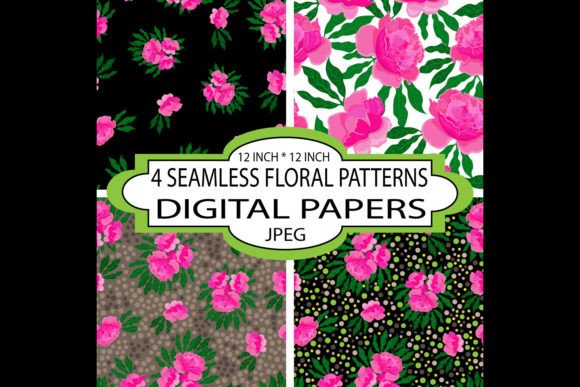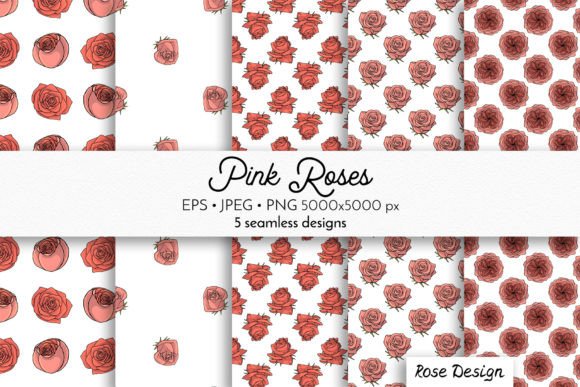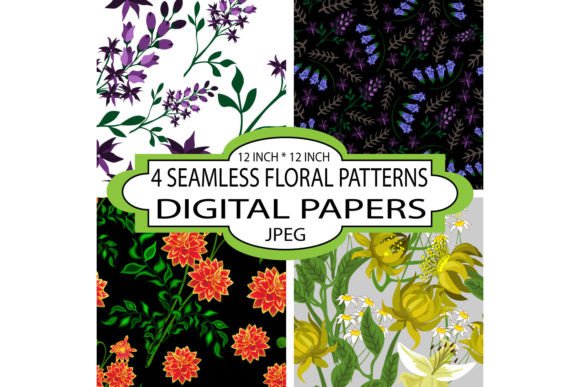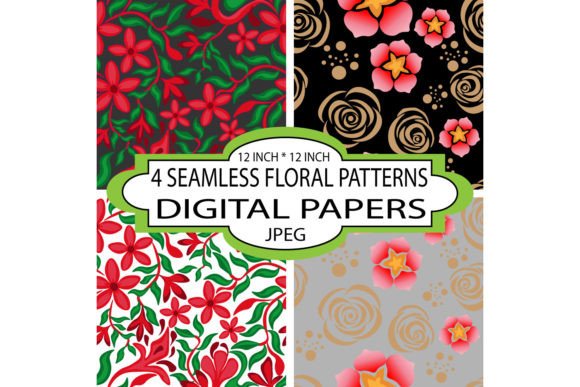
Pink Flowers, Seamless Floral Patterns
Soft pink florals bring warmth, charm, and quiet sophistication to any creative project—whether you’re designing custom wallpaper for a boutique café, printing elegant gift wrap for your small business, or crafting hand-lettered invitations for a spring wedding. But not all Pink Flowers, Seamless Floral Patterns deliver the clean, professional results they promise. Many creators unknowingly choose files that tile poorly, lack true seamlessness, or don’t scale well—leading to visible repeats, misaligned petals, or awkward gaps when printed at 12×12 inches (3600×3600 px). That’s why understanding what makes a pattern *actually* seamless—and how to use it effectively—is essential.
Why “Seamless” Isn’t Always Seamless
A truly seamless pattern repeats infinitely in all directions without visible breaks, lines, or distortion. Yet many digital papers labeled “seamless” fail this basic test—not because they’re low quality, but because they weren’t built with proper tile alignment. You might download a JPEG labeled “12 inch × 12 inch, 3600 px × 3600 px” and assume it’s ready for wall murals or fabric printing—only to discover faint horizontal bands or duplicated stems when tiled in Photoshop or Illustrator. These aren’t flaws in your software; they’re clues that the pattern wasn’t constructed using offset-based tiling techniques.
This is especially common with vintage-style pink floral patterns, where delicate stems and layered blossoms increase the risk of misalignment. A single misplaced petal near the edge can create an obvious stripe or ghost image across your entire surface—ruining the subtle elegance you wanted.
What to Check Before Downloading or Buying
Before adding Pink Flowers, Seamless Floral Patterns to your cart—or worse, applying them to a client project—verify these three things:
- Test the repeat yourself: Open the JPEG in any image editor, duplicate the canvas, and place one copy directly above, below, left, and right of the original. Zoom out. Look closely along every seam. If you see even a slight shift in stem direction, color bleed, or mismatched leaf placement, it’s not fully seamless.
- Confirm resolution and dimensions: “12×12 inches” means little unless it’s paired with sufficient pixel density. For high-quality print (especially textiles or wallpaper), 300 DPI is standard—so 12×12 inches = 3600×3600 px. Lower-resolution files may look fine on screen but blur or pixelate when enlarged.
- Review usage rights: Not all digital downloads include commercial licenses. If you plan to sell stationery, fabric, or party décor made from the pattern, verify whether personal use only applies—or if extended licensing is required.
Common Missteps—and Smarter Alternatives
Mistake: Assuming “vintage” means “low-res.”
Some designers equate soft, faded pinks and delicate line work with lower resolution or compressed JPEGs. But true vintage elegance doesn’t require sacrificing clarity. In fact, high-resolution seamless patterns let you scale confidently—from tiny scrapbook accents to full-wall installations—without losing detail in the stamen or curl of a rose petal.
Better approach: Choose patterns built at 3600×3600 px, then downscale as needed. You’ll retain flexibility for both web previews and premium print outputs.
Mistake: Ignoring color mode and background.
A pattern saved in RGB with a white background may render differently when printed on kraft paper or dyed cotton. And if your design software defaults to CMYK while your file is RGB, subtle shifts in blush tone or mauve depth can throw off your palette.
Better approach: Look for vendors who provide color profiles or specify RGB/CMYK intent. When in doubt, request a proof swatch—especially before committing to large textile runs or wallpaper orders.
How These Patterns Shine Across Real Projects
These aren’t just decorative extras—they solve real workflow challenges. A well-built Pink Flowers, Seamless Floral Pattern saves hours in manual tiling, eliminates guesswork in repeat spacing, and ensures consistency across product lines. Imagine launching a cohesive collection: matching gift tags, wrapping paper, and thank-you cards—all pulled from the same 12×12 inch digital paper. Or refreshing a client’s cafe menu board and napkin design with one elegant, scalable motif instead of juggling five mismatched elements.
For interior designers, seamless pink florals translate beautifully to removable wallpaper—no visible joins behind furniture or across doorways. For educators and hobbyists, they simplify lesson materials and handmade cards alike: no cropping, no trial-and-error alignment, just consistent, calming visual rhythm.
Choosing the Right File Format—and Why JPEG Still Works
You’ll often see recommendations to “always use PNG for transparency” or “stick with TIFF for archival quality.” But for most practical applications—wallpaper, fabric printing, digital stationery—JPEG remains ideal. It’s universally supported, lightweight, and preserves rich tonal gradation in soft pinks and creamy whites. Just ensure it’s saved at maximum quality (not “optimized” or “progressive”) and contains no embedded compression artifacts.
Transparency isn’t always necessary—even for card making or overlays, a clean white or transparent background depends more on your design context than the file type. What matters most is how cleanly the pattern repeats, not whether it has an alpha channel.
Final Thought: Elegance Lives in the Details
The quiet confidence of a successful pink floral pattern lies in its invisibility—not in how bold it looks, but in how effortlessly it integrates. When your wallpaper flows seamlessly around a corner, when your fabric print aligns perfectly at the seam, when your digital scrapbooking kit feels cohesive across dozens of pages—that’s the result of choosing thoughtfully, testing intentionally, and respecting the craft behind each petal and stem.
So before you click “download,” take ten seconds to preview the tile. Zoom in. Scroll across. Ask: Does this feel effortless—or does it ask for extra work? With the right Pink Flowers, Seamless Floral Patterns, the answer should always be the former.